A walk in nature

Vriende van Moreletakloof nooi u vriendelik uit om saam met Prof Braam van Wyk en Elsa te kom stap op die 6de Oktober. Hulle sal die  interessantste feite oor bome sowel as veldplante en die natuur oor die algemeen met ons deel. Prof Braam is een van die opstellers van ‘Veldgids tot Bome van Suider Afrika’.

Ons ontmoet in die parkering van Moreletakloof Natuur Reservaat – 07.30 vir 08:00. Die koste is R 40/persoon, wat  aangewend sal word vir onderhoud van ons reservaat. Die uitstappie sal eindig by die informasie hut waar ons nog kan gesels oor wat ons gesien het terwyl ons iets te koels drink. Die uitstappie sal tussen drie en vier ure duur. Onthou asseblief iets om  te drinke vir die stappie en u kamera.

Friends of Moreletakloof would like to invite you for a interesting walk in  the Moreletakloof Nature Reserve with Prof Braam van Wyk and Elsa on the 6th of October at 07:30 for 08:00. Prof Braam is  the co-writer of ‘Veld guide to Trees of Southern Africa’. He will supply us with the most interesting facts about trees, veld plants as well as facts about nature. I promise you that this will be the most enjoyable  walk.

The cost will be R40/person, which will be used for the upkeep of our reserve. We will end the walk at the formation hut where we will discuss what was seen while you have something cool to drink. Please remember  something to drink on the walk as well as your camera.

Crawling – A blog post by Simon Tickle

Contribution by a friend that visited the Moreleta Kloof Nature Reserve, and spent some time with a local, Jeannie:

“The ground is my friend. For someone who spends so much of his time in the air, the feeling of a secure surface comforts me as a mother’s hug soothes a child.

Since becoming an adult I have maintained a respectable distance between me and the ground as befits a grown-up conforming to public dignity, but a recent acquaintance has caused me to reconsider my attitude and revert to the horizontal.
 
Jeannie loves to crawl. She crawls through the grass and the undergrowth, seeing things that are missed or trampled underfoot by the vertical adherents. It’s a whole other world down here where the small things are. In the words of Sebastian the Crab (The Little Mermaid, Walt Disney) and as echoed by Jeannie, “Darlin’ it’s better, Down where it’s wetter, Take it from me!”

Casual Day 2013

Moreletakloof Nature Reserve, Helios Street, Moreletapark, Pretoria would like to invite the elderly, persons in wheelchairs as well as the blind, to come out to our very special reserve for Casual Day, on the 6th of September, from 09:00 till 13:00, to see what we can offer you. We will have a map available at the gate, so that you can see where the tarred road and the other off-road pathways are.
You will be able to go down into the reserve, on a tarred road, or if you are fit you can make use of our off-road pathways, that was evened out so that you can go there with a friend, and see what beautiful piece of nature is available for you to visit.

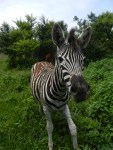
Blind people enjoy the pathways because they can come close to nature and feel and hear all the birds and the many animals, like Blesbuck, Zebra, Springbuck and Impala.

Casual  Day is a special day, please make use of this invitation, on the 6th September or you can even come to the reserve on Saturday, the 7th, we are open from 06:00 till 18:00.
Please do not go in on your own, bring a friend with you.

You can also visit our brand new bird Hide, next to the Rademeyer spruit, under the big old Wild Peach and White Stinkwood trees. Clear signage on the roads and pathways.

Contact Jeannie 082 9274673 or info@moreletakloof.co.za

Bird walk with Bird Life SA on Saturday 17 August 2013

The Friends of Moreleta Kloof are inviting you to join us for a three hour Bird walk with Ernst Retief, from Bird Life SA on Saturday 17 August 2013.

Ernst is the Regional Conservation Manager: Gauteng and Limpopo of Bird Life SA.

We will meet in the parking area, at the gate, from 07:30 for 08:00. Please remember your camera and your binoculars, and something to drink. We would like a donation of R40 per person to finish the setup of our new bird hide!

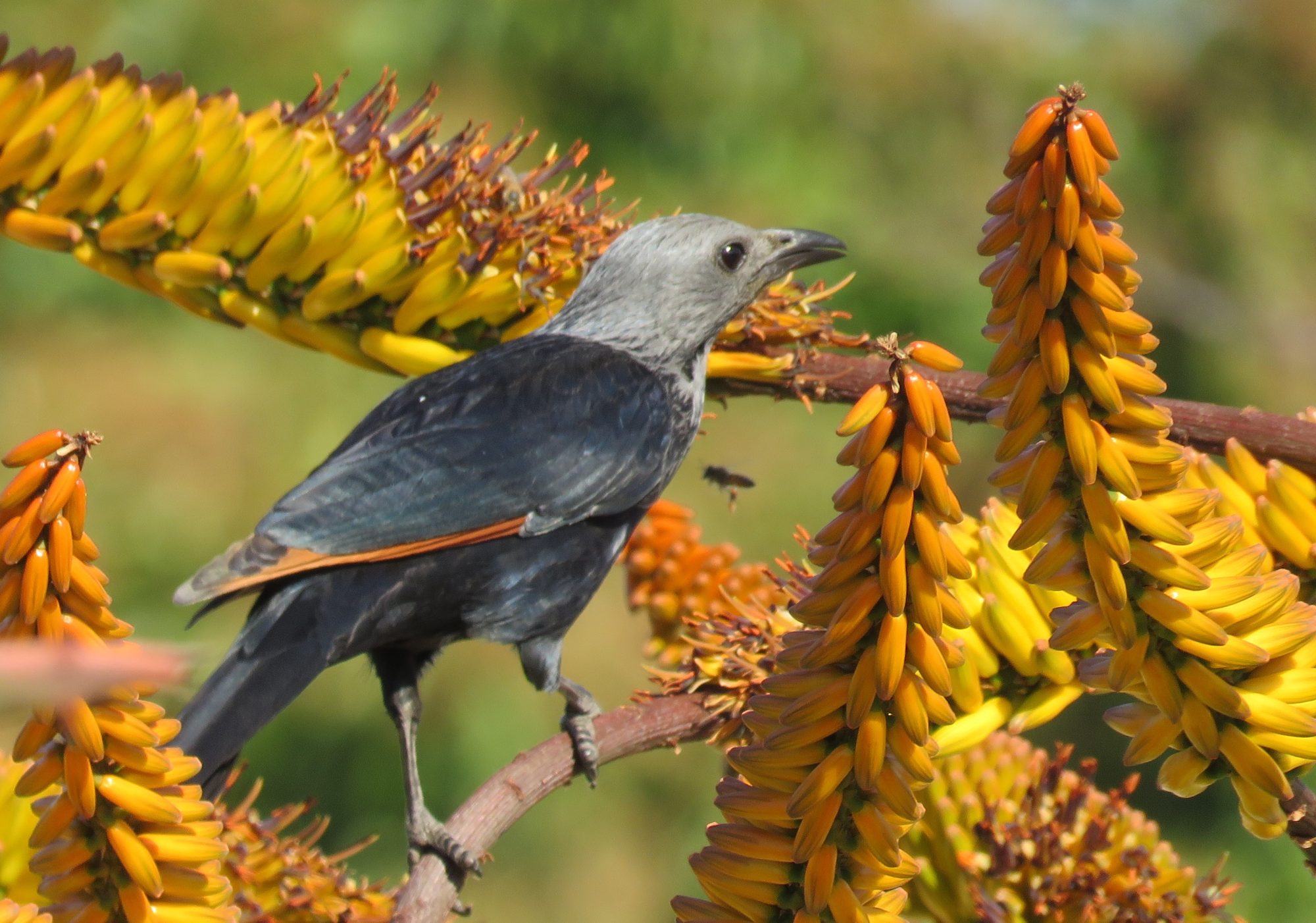
All the birds are returning to our reserve after the Winter, and they will get a lovely surprise to see our new Bird hide. Ernst Retief can give many interesting facts about bird life in South Africa. He is very involved in studies done as well as the preservation of our bird species.

If you have been visiting our reserve and can send us photos of what you saw, it will be appreciated (info@moreletakloof.co.za)

You are welcome to take an early walk, from 06:15, because that is when the birds are most active, among the trees. Then join us at 07:30 with Ernst.

For more information contact Jeannie du Plessis on 082 9274673 or info@moreletakloof.co.za

Where: Moreleta Kloof Nature Reserve
When: Saturday, 17 August 2013
Time: 07:30 for 08:00

Join us and do a good green deed!

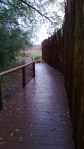
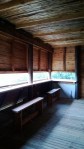
Moreletakloof Nature reserve can now boast to have a Bird hide and a rest deck that can facilitate everybody.

We did finish the construction but need to clear the areas around this sites as well as level out our existing pathways that leads to the hide, as well as a few other routes that we would like to use as off-road pathways that can be used by persons in wheelchairs, and blind persons, to reach other parts of the reserve.

What is needed please will be the following:

1. Three big loads of river sand (brown) as well as three big loads of fine crushed rocks (small ones but not gravel), to make the grass pathways even with the sand and stabilize the other pathways with fine rocks with the use of stampers(2, we can hire, but for free), after it was levelled.

Some parts needs about no attention but others are not level at all, and we might need a small grader to level the serious parts and a small loader that can travel, on our two meter wide pathways, to take the filling and remove extra ground or rocks and roots.

If landscaping contractors can help, we would be grateful. This is priority, and we need to do this as soon as possible.

2. People that are willing to help us on Saturday’s, for a few hours. We will need spades, picks and a few wheel-barrows. We just need to know how many people will help, on which days, so that we can let Nature Conservation, know beforehand.

We need to remove water grass from the spruit, in front of the hide, by hand. It is difficult but by using forks we can remove some roots, so that we have clear water to attract the birds. You will need water boots, because the water is about 20 – 40 cm deep. This is a very sensitive wetland area but do have the permission from Nature Conservation.

We need to plant a few dry trees in drums, so that the birds can land on them and also place some on a small island and along the side to, set boundaries and try and keep this water open.

We need to clear the other routes from cut down invader plants, and also making it less slippery in the rainy season, by placing wooden logs and fastening it with iron spikes. This is the sort of work sessions that could follow.

It would be so good if we could have a group of people that can work with us, to full fill our dreams, and to help Nature Conservation keep this reserve looking good and safe, in the future.

For more information contact Jeannie du Plessis at info@moreletakloof.co.za, for more information.


Birdringing weekend on 15 and 16 October 2011 with Dirk, Karen and Stefan Stuyvenberg.

On the 15th of October from 09:30, the Animal Demography Unit (ADU – http://www.adu.org.za) will be presenting interesting talks at the National Botanical Gardens (Pretoria) about birdringing, the SA Bird Atlas, butterflies, Virtual Museums and Virtual Tree Terbariums among others. This will be followed by a picnic lunch and feedback session until 15:00. For the full program see below;

[singlepic id=89 w=320 h=240 mode=web20 float=center]

The next day, on the 16th of October 2011 at 06:00, we will walk from the parking at the gate of the Moreleta Kloof Nature Reserve where we will meet up with Dirk, Karen and Stefan Stuyvenberg. They will be setting up nets, in order to ring approximately two hundred birds. They will demonstrate the correct bird ringing methods  and also answer questions on how to become involved. This walk is a must for bird lovers and nature enthusiasts alike!

For more information please contact us on  info@moreletakloof.co.za

Bird Ringing Report: Moreleta Kloof Nature Reserve

Background:

The South African Bird Ringing Unit (SAFRING) administers bird ringing in Southern Africa, supplying rings, ringing equipment and services to volunteer and professional ringers in South Africa and neighboring countries. All ringing records are curated by SAFRING, which is an essential arm of the Animal Demography Unit at the University of Cape Town. The Bird Ringing Scheme in South Africa was initiated in 1948, so 1998 saw the 50th anniversary of the scheme. During this period over 1.7 million birds of 852 species were ringed. There have been a total of 16 800 ring recoveries since the inception of the scheme. This gives an overall recovery rate for rings in Southern Africa of marginally less than 1%, averaged across all species. This probability varies enormously across species. The traditional objective of SAFRING is to establish a database of recoveries of Southern African birds that can be used to establish information about movement and survival. Every bird ringed, no matter what species or where it was ringed has the potential to contribute to the SAFRING recovery database. Since 1982, this database has been supplemented by a re-trap database, supplied by ringers on a voluntary basis. This contains ringing and latest re-trap details of birds recaptured at least 12 months after being ringed. The database as a whole is a resource which may be used by researchers, conservation biologists and managers, and primarily provides answers to questions related to movement and survival. Research into bird populations of importance to fisheries, agriculture, conservation and water management authorities involves bird ringing. Ringing provides a cost- effective tool for monitoring our environment and commonly draws attention to pollution, poisoning, power-line incidents, long-line fishing fatalities and other hazards.

There are currently ±200 active ringers operating in South Africa and neighboring countries such as Namibia, Botswana, Zimbabwe, Zambia and Malawi. About 70 000 birds are ringed annually. Ringers, both amateur and professional, have to pay for all rings used. Bird ringing in South Africa is very strictly controlled by the “CODE OF ETHICS FOR BIRD RINGERS”

Training:

The intensive “training before qualification” consists of at least one year active ringing under the mentorship of an A1 ringer to master correct identification of birds, accurate data capturing and looking after the well-being of the birds during the processing of birds.

Projects:

SESAW: Survival Estimates in Southern African Weavers, Aug 2009 – Dec 2012

A new study has been launched to ring weavers in a way to maximize data for geographic variation in survival rates. Weavers are fairly easy to catch in large numbers, making them ideal candidates for large-scale studies. Species that could work well include Southern Red Bishops and Southern Masked Weavers. The key is to ring at sites where weavers are often recaptured. Ringers are able to contribute to this project in their normal ringing sessions. Due to the ideal habitat it was decided to register Moreleta Kloof for the SESAW project.

The aim is to measure geographic variability in survival rates of weavers in southern Africa over 3.5 years (2009-2012).

A normal ring session will typically start at ± 04h00 in the morning and could last up to 15h00 depending on weather conditions, temperature and numbers caught. During our recent visit to Moreleta Kloof we were fortunate to be able to ring a significant number of Weavers, Bishops, Thick-billed Weavers and Cape Weavers amongst many other species as was the case during previous ringing sessions in Moreleta Kloof.

The species ringed and released during our last ringing session is listed in the attached documents. In total more than 3825 birds have been ringed over a period of 8 years.

We would like to convey our special thanks to Adelene Marais, Functional Head: Nature Conservation and Ina from Rademeyers restaurant for allowing us to ring at Moreleta Kloof Nature Reserve.

Many thanks

Dirk, Karen and Stefan van Stuyvenberg

Moreleta Kloof Ringing Report April 2011 Summary

Moreleta Kloof Ringing Report April 2011 Bird Listing

Bird walk with Faansie Peacock

On the 5th of February 2011, at 06:00, we will hold a Bird Walk with Faansie Peacock in the Moreleta Kloof Nature Reserve.  This walk will be for serious bird-lovers and will last about three hours. Please remember your cameras and something to drink.

We are privileged to have around 160 different species of birds in the Reserve.

Please park at the gate in Helios Street at the security hut.

Cost R50.00 per person. For more information please contact us on info@moreletakloof.co.za or call Jeannie on 082 927 4673.

A birdwatcher from Maidstone in the UK writes about the Moreleta Kloof

Moreletakloof is a small private nature reserve to the southeast of Pretoria, South Africa. The reserve claims some wonderful birds with Red-chested Flufftail and Ovambo Sparrowhawk on their list.

The guard on the gate let me in at 06.00 while it was still dark. It was cold too. I had 3 layers, gloves and a hat but found myself wishing I had more….

To read the rest of this post please visit;

http://redgannet.blogspot.com/2010/08/moreletakloof-johannesburg-jnb.html

Birdwatching day, 12 June 2010

The Moreleta Kloof Nature Reserve, along with Faansie Peacock, will be hosting a bird watching day on Saturday 12 June 2010. The walk will start at 08:00 AM and end around 12:00 PM.

Entrance is free of charge, just bring your birding gear and yourself! A few snacks and something to drink will also be a good idea while we are out in the veld. Vehicles can be safely parked inside the reserve.

During the last birdwatching day in February 2010, more than 70 species were identified.

Afterwards, you can enjoy a meal at the Voerkraal.

For more information, please contact us on info@moreletakloof.co.za