Background:
The South African Bird Ringing Unit (SAFRING) administers bird ringing in Southern Africa, supplying rings, ringing equipment and services to volunteer and professional ringers in South Africa and neighboring countries. All ringing records are curated by SAFRING, which is an essential arm of the Animal Demography Unit at the University of Cape Town. The Bird Ringing Scheme in South Africa was initiated in 1948, so 1998 saw the 50th anniversary of the scheme. During this period over 1.7 million birds of 852 species were ringed. There have been a total of 16 800 ring recoveries since the inception of the scheme. This gives an overall recovery rate for rings in Southern Africa of marginally less than 1%, averaged across all species. This probability varies enormously across species. The traditional objective of SAFRING is to establish a database of recoveries of Southern African birds that can be used to establish information about movement and survival. Every bird ringed, no matter what species or where it was ringed has the potential to contribute to the SAFRING recovery database. Since 1982, this database has been supplemented by a re-trap database, supplied by ringers on a voluntary basis. This contains ringing and latest re-trap details of birds recaptured at least 12 months after being ringed. The database as a whole is a resource which may be used by researchers, conservation biologists and managers, and primarily provides answers to questions related to movement and survival. Research into bird populations of importance to fisheries, agriculture, conservation and water management authorities involves bird ringing. Ringing provides a cost- effective tool for monitoring our environment and commonly draws attention to pollution, poisoning, power-line incidents, long-line fishing fatalities and other hazards.
There are currently ±200 active ringers operating in South Africa and neighboring countries such as Namibia, Botswana, Zimbabwe, Zambia and Malawi. About 70 000 birds are ringed annually. Ringers, both amateur and professional, have to pay for all rings used. Bird ringing in South Africa is very strictly controlled by the “CODE OF ETHICS FOR BIRD RINGERS”
Training:
The intensive “training before qualification” consists of at least one year active ringing under the mentorship of an A1 ringer to master correct identification of birds, accurate data capturing and looking after the well-being of the birds during the processing of birds.
Projects:
SESAW: Survival Estimates in Southern African Weavers, Aug 2009 – Dec 2012
A new study has been launched to ring weavers in a way to maximize data for geographic variation in survival rates. Weavers are fairly easy to catch in large numbers, making them ideal candidates for large-scale studies. Species that could work well include Southern Red Bishops and Southern Masked Weavers. The key is to ring at sites where weavers are often recaptured. Ringers are able to contribute to this project in their normal ringing sessions. Due to the ideal habitat it was decided to register Moreleta Kloof for the SESAW project.
The aim is to measure geographic variability in survival rates of weavers in southern Africa over 3.5 years (2009-2012).
A normal ring session will typically start at ± 04h00 in the morning and could last up to 15h00 depending on weather conditions, temperature and numbers caught. During our recent visit to Moreleta Kloof we were fortunate to be able to ring a significant number of Weavers, Bishops, Thick-billed Weavers and Cape Weavers amongst many other species as was the case during previous ringing sessions in Moreleta Kloof.
The species ringed and released during our last ringing session is listed in the attached documents. In total more than 3825 birds have been ringed over a period of 8 years.
We would like to convey our special thanks to Adelene Marais, Functional Head: Nature Conservation and Ina from Rademeyers restaurant for allowing us to ring at Moreleta Kloof Nature Reserve.
Many thanks
Dirk, Karen and Stefan van Stuyvenberg
Moreleta Kloof Ringing Report April 2011 Summary
Moreleta Kloof Ringing Report April 2011 Bird Listing
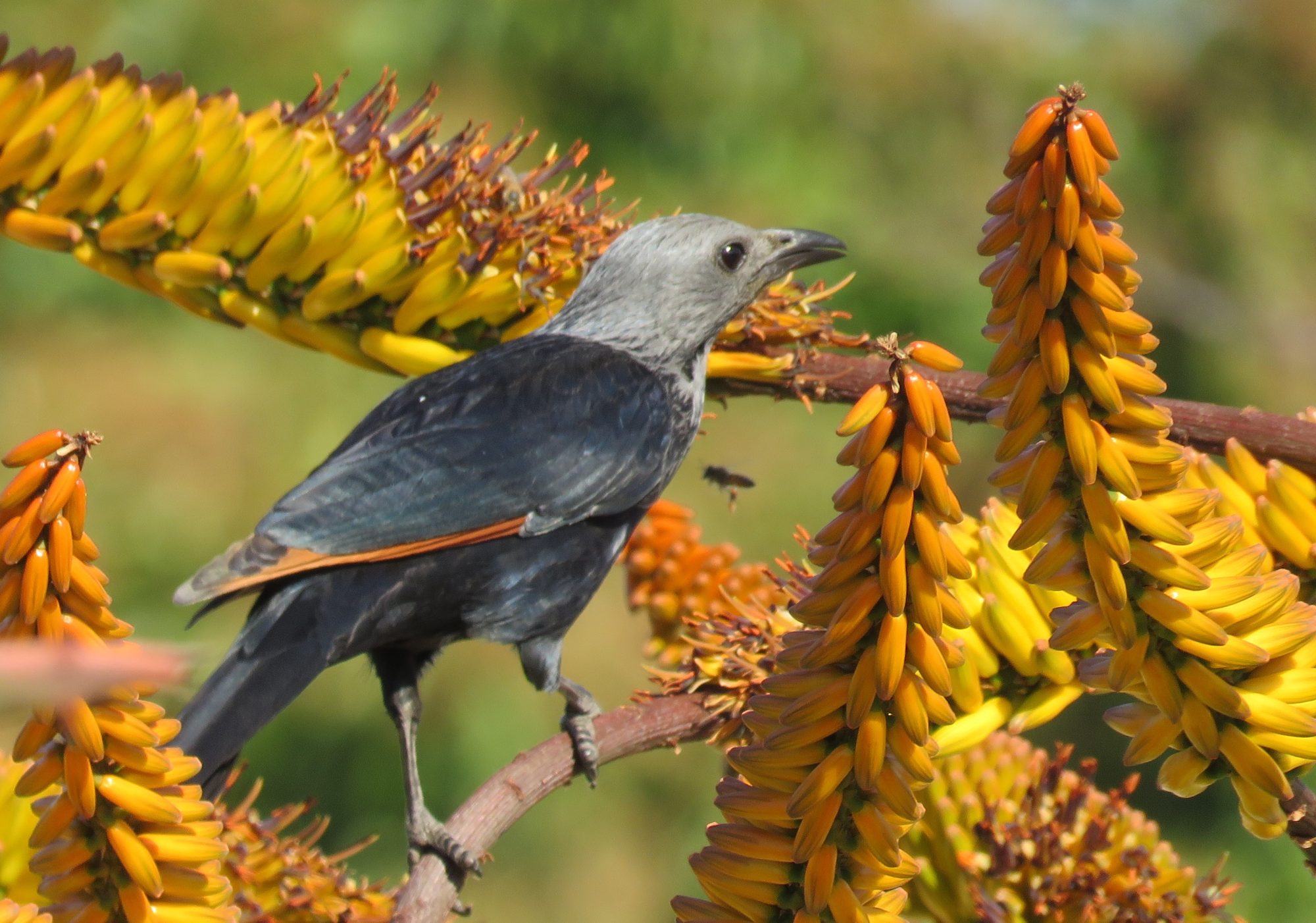
 Moreleta Kloof Nature Reserve